TECHNICAL ANSWER
What is the chemistry for MonoSealant?
MS Polymer. 1-component, moisture-curing, free of isocyanate, solvents and silicone.
MonoSealant is the flexible MS-Polymer detailing product for compatible laps, connection joints and local interfaces. It belongs where movement or a joint needs a flexible bonded seal — not where a rigid topcoat is being asked to bridge a failed detail.
No. Prokol states unique adhesion properties on EPDM, but MonoSealant is also specified for roof, facade, floor and pond structures and for bonding plastics, metals, alloys, wood, concrete and compatible paint systems.
Yes — Prokol's PDS states it adheres to most surfaces even moist and damp without a primer. The surface must still be stable, compatible and free of grease and dust.
Coverage is governed by bead width and depth — calculate linear metres from joint geometry, not m².
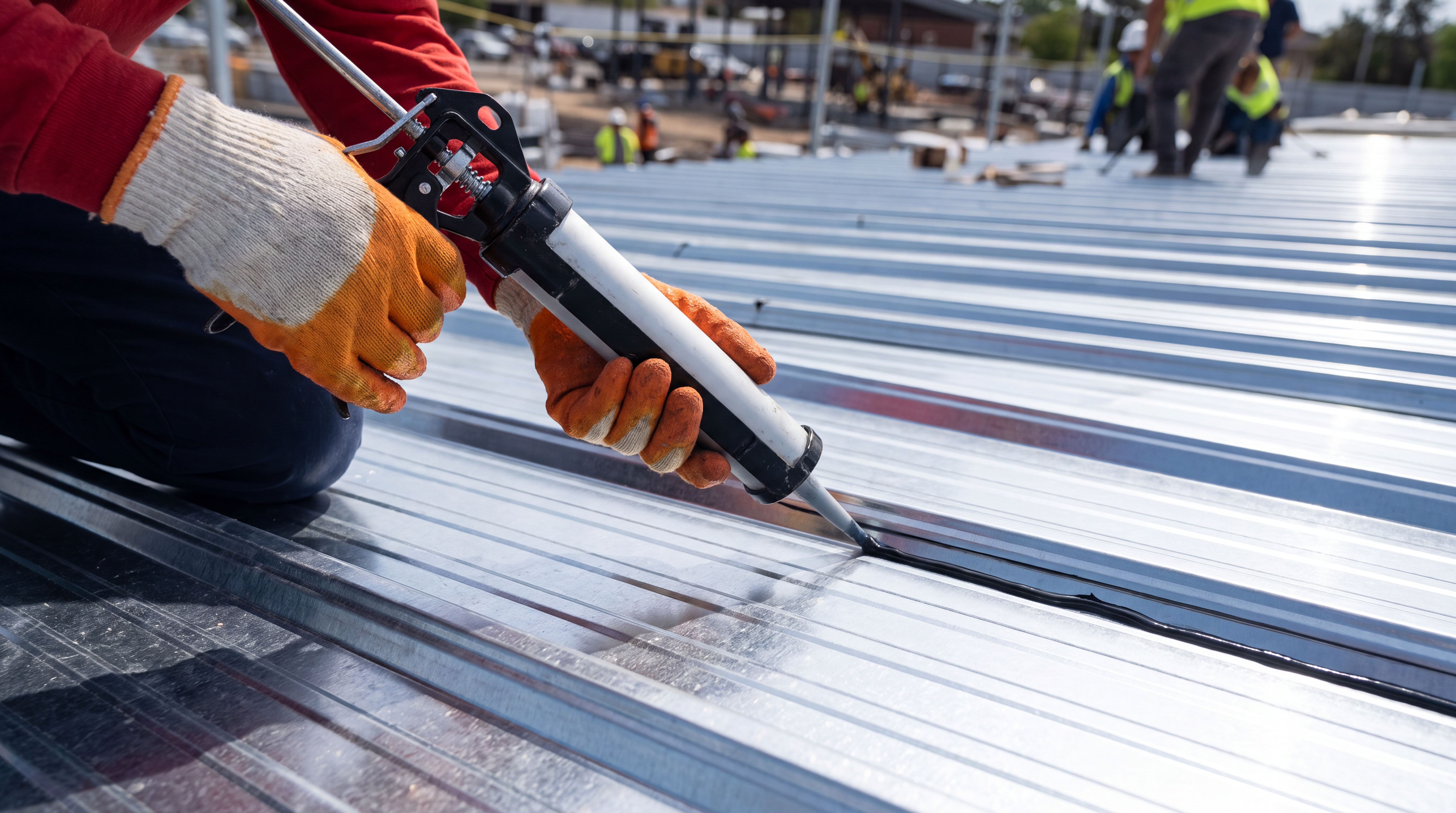
At compatible laps, joints and local details that require flexible sealing before or as part of the specified protective build-up.
Start with the defect, not the product name. That is the safest way to understand whether this system belongs on the job.
Treat the lap as a detail problem first. A flexible compatible seal can be required before the surrounding coating system is completed.
Failed joint material and joint geometry should be dealt with before the main coating rather than buried beneath it.
MonoSealant is particularly relevant because Prokol states strong adhesion to EPDM, subject to substrate condition and compatibility.
Manufacturer guidance allows adhesion to many compatible moist and damp surfaces without primer, but contamination, standing water and unstable material still need to be avoided.
Not the answer. These are specifically outside the product's stated limitations.
Not the answer. Sealant cannot correct structural movement, missing fixings or panel failure.
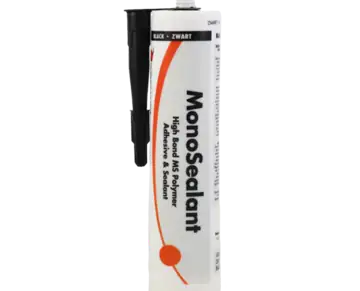
Rocathaan MonoSealant is a durable professional adhesive sealant based on MS-Polymer technology with unique adhesion properties on EPDM. It moisture-cures into a durable rubber that retains elasticity. Specially designed for adhesion and sealing of EPDM, roof, facade, floor and pond structures, sealing construction joints, and bonding plastics, metals, alloys, treated and untreated wood, concrete and compatible coating systems. Also used as a repair adhesive for old MS-Polymer joints. Free of isocyanate, solvents and silicone.
compatible laps, connection joints, EPDM interfaces and local roof or facade details where a flexible bonded seal is required and the substrate has been correctly prepared.
Confirm the defect is a joint, lap or local interface that needs flexible sealing rather than structural repair.
Apply to stable, compatible, dry, uncontaminated, grease-free and dust-free surface. Ensure correct joint dimensions for maximum movement performance.
Tool the sealant to the required joint geometry. Paintable with emulsion paints. Integrates with the surrounding waterproofing or coating system.
Useful product data should answer a question, not sit in a wall of specification cards. These answers use the current technical information for MonoSealant.
MS Polymer. 1-component, moisture-curing, free of isocyanate, solvents and silicone.
Black. Liquid and cured product.
290 ml cartridge. Article 14030-290.
1.48 kg/l. Mixed product.
15 minutes. At 23°C / 55% RH.
None. Non-shrink and blister-free.
300%. DIN 53504.
0.75 MPa. DIN 53504.
0.30 MPa. Per Prokol PDS.
A18. DIN 53505.
-40 to +90°C. Once fully cured.
+5 to +40°C. Ambient and surface.
At least 12 months. Stored dry at +15–+25°C, unopened.
No. Prokol states unique adhesion properties on EPDM, but MonoSealant is also specified for roof, facade, floor and pond structures and for bonding plastics, metals, alloys, wood, concrete and compatible paint systems.
Yes — Prokol's PDS states it adheres to most surfaces even moist and damp without a primer. The surface must still be stable, compatible and free of grease and dust.
Coverage is governed by bead width and depth — calculate linear metres from joint geometry, not m².
At compatible laps, joints and local details that require flexible sealing before or as part of the specified protective build-up.
Elongation 300% (DIN 53504), tensile strength 0.75 MPa, modulus at 100% 0.30 MPa, Shore hardness A18, skin formation 15 minutes at 23°C.
The technical facts are already above. These answers start with the leak, defect or site condition so it is clear when MonoSealant belongs in the solution — and when it does not.
Treat it as a joint/detail problem first. A main cladding coating should not be expected to bridge a failed moving lap by itself. Where the substrates are compatible, MonoSealant can be used to create a flexible bonded seal before the surrounding refurbishment system is completed.
No. Failed joint material should be assessed and the joint geometry dealt with before the main coating stage. MonoSealant is intended for compatible connection joints and flexible details; coating over a failed joint can leave the original movement defect unresolved.
Yes, this is one of the situations where MonoSealant is particularly relevant. Prokol states unique adhesion properties on EPDM, including moist and damp surfaces, subject to the surface remaining stable, compatible and free from grease and dust.
Not necessarily. The manufacturer states MonoSealant can adhere to most compatible surfaces when moist or damp without a primer. That does not mean it should be applied over contamination, standing water, unstable material or an unsuitable substrate.
No. The product limitations exclude continuous water loads and dilation joints. If the detail is permanently submerged, structurally moving beyond the sealant design or failing because of the building geometry, the detail needs a different specification.
Calculate by linear metres and bead dimensions, not square metres. A 290 ml cartridge is a joint product; bead width and depth determine how much length one cartridge will cover.